What's Actually in Your Workout Clothes (and Why It Matters More Than You Think)
|
1,000+
Harmful substances tested for
|
99%
Solvents recovered in TENCEL™ production
|
Class I
OEKO-TEX rating, the strictest tier
|
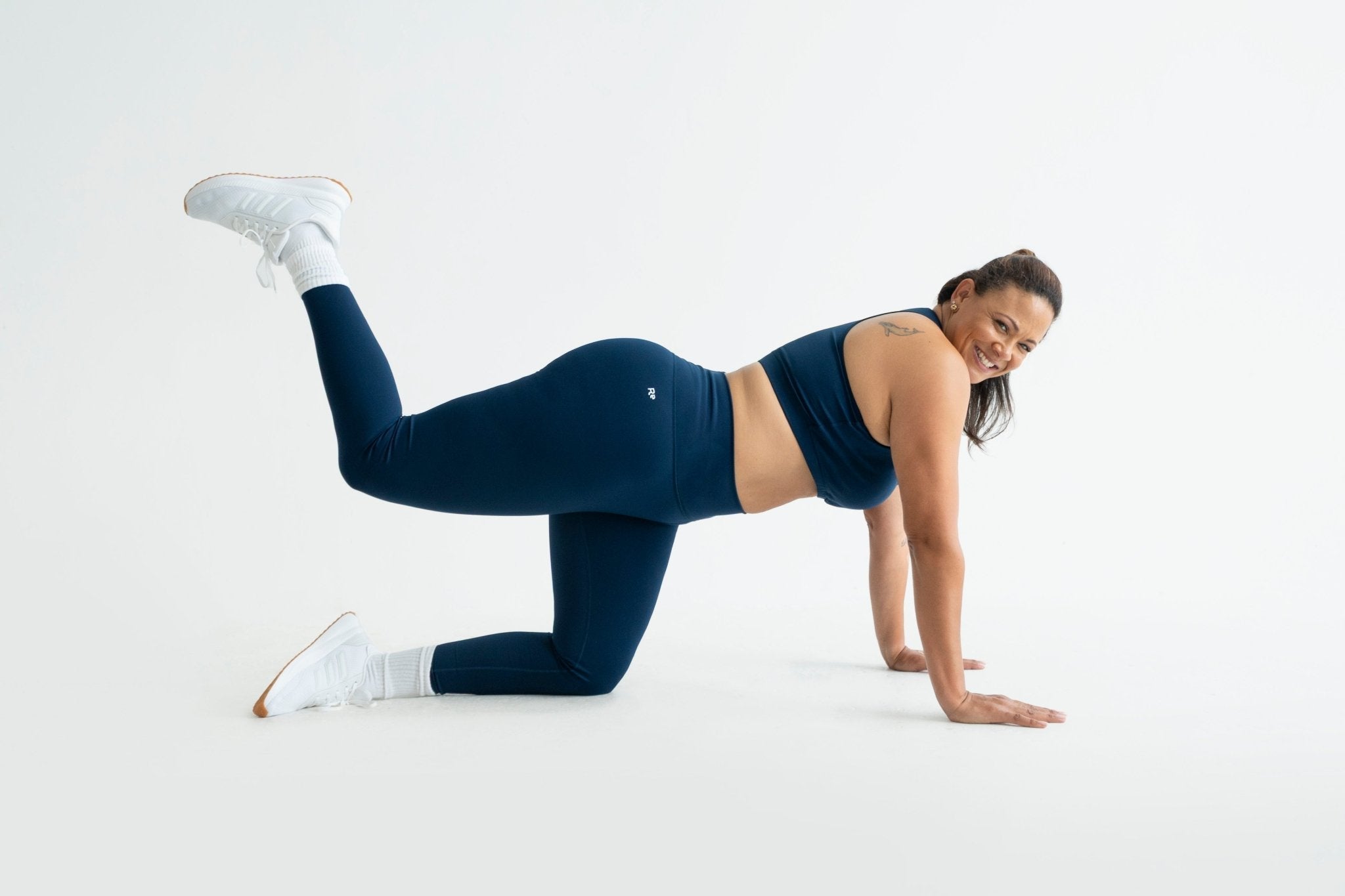
Most workout clothes are plastic. Polyester, nylon, and elastane are all derived from petroleum, and they are typically finished with chemical coatings to add stretch, wick moisture, and resist odor. Because clothing is lightly regulated, there is rarely any requirement to disclose what those coatings are, or what they leave behind on the fabric.
Activewear makes this especially worth paying attention to. During exercise the body heats up, pores open, and sweat rises to the surface. Sweat is a mild solvent, which means it can draw residual chemicals out of fabric and onto the skin. The clothing worn closest to the body during a workout is, for that reason, the clothing that warrants the most scrutiny.
Two things make the difference between activewear that is genuinely clean and activewear that is only marketed that way: an independent certification called OEKO-TEX Standard 100, and the material itself. Both are worth understanding, because once they are clear, the rest of the category is easy to read.
What OEKO-TEX Standard 100 actually means
The fashion industry is full of language that sounds reassuring and means very little. “Eco-friendly dyes.” “Tested for safety.” Tested by whom, and against what standard? Those phrases can appear on any label, with nothing behind them.
OEKO-TEX Standard 100 is different. It is an independent, third-party certification, and the organization that runs it has no financial relationship with the brands it tests. Every component of a finished garment is examined, not only the main fabric: threads, dyes, zippers, buttons, linings, and coatings.
“More than 1,000 harmful substances, screened in every component of the garment. Lead, formaldehyde, PFAS, BPA, carcinogenic dyes.”
The certification is tiered. Class I is the strictest, reserved for products made for direct contact with the most sensitive skin, including baby clothing. A garment that carries Class I certification has cleared a bar most brands never attempt.
The standard also tightens over time. In 2025, OEKO-TEX cut the allowable limit for BPA tenfold, from 100 mg/kg to 10, and sharpened its rules on PFAS. As of January 2026, certified products must stay under 25 parts per billion for each regulated PFAS substance. The bar a certified fabric has to clear this year is higher than the one it cleared last year, which is exactly what a certification worn against the skin should do.
Why TENCEL™, and how it is made
TENCEL™ is produced by Lenzing, a company based in Austria. The fiber begins as responsibly harvested wood pulp, mostly from eucalyptus and beech grown in FSC-certified forests. Eucalyptus requires roughly five times less water than cotton and grows without pesticides, which sets it apart from conventional fabrics before it is ever spun.
The way it is made is what distinguishes it:
| 1 |
Closed-loop production
The wood pulp is dissolved in a single organic solvent within a closed-loop system that recovers and recycles more than 99% of the water and solvent. Very little is wasted, and very little of consequence leaves the facility.
|
| 2 |
No harsh residue
The solvent is non-toxic and removed during production, so the finished fiber carries none of the chemical residue associated with traditional viscose or rayon. It arrives as a genuinely clean yarn.
|
| 3 |
OEKO-TEX Class I certified
TENCEL™ fibers hold OEKO-TEX Standard 100 Class I certification. Their softness and performance come from the structure of the fiber itself, not from a coating applied afterward.
|
✓ OEKO-TEX Standard 100, Class I ✓ FSC Certified Forests ✓ EU Ecolabel ✓ Biodegradable by TÜV Austria
How it performs
Clean sourcing is only worth so much if the fabric cannot keep up with a real workout. TENCEL™ can.
Its fibers have a smooth, round cross-section that sits gently against the skin and reduces friction naturally, with no finish applied to create the effect. They absorb moisture efficiently and release it quickly, which keeps the body drier than many synthetics that trap heat instead.
|
💧 Moisture-wicking
Absorbs and releases moisture efficiently, with no chemical treatments needed to get there.
|
🌬️ Breathable
Air moves through the fiber structure freely. No heat-trapping, no stuffiness mid-workout.
|
|
🛡️ Hypoallergenic
Smooth fibers resist bacteria and dust mites. If you have reactive skin, this one matters a lot.
|
✨ Naturally soft
The fiber is soft on its own, so no softening finish is added on top. The feel comes from the yarn, not a coating.
|
The core fabric is 93% TENCEL™ Lyocell and 7% spandex, the small amount of stretch that lets it move with the body and hold its shape.
What this means when you shop Reprise
When a Reprise garment carries OEKO-TEX Standard 100 certification, that testing covers everything: every thread, every dye, every piece of hardware, examined by an independent third party with no stake in the result.
Paired with TENCEL™, the whole picture holds together, from how the fiber is grown to how the finished piece is certified. Each certified product carries a unique certificate number that can be verified directly on the OEKO-TEX website.
A few common questions
Shop Reprise
Activewear you can actually trust
Browse our OEKO-TEX certified, plant-based styles, made from trees instead of plastic.
Shop certified activewear →